Real Estate Market Along National Highway 13 Sees Strong Growth… A Golden Opportunity for Foreign Investors
Northeast Ho Chi Minh City – National Highway 13: New Real Estate Investment Opportunities Driven by Major Infrastructure Transformation
National Highway 13 (QL13), which connects Ho Chi Minh City and Binh Duong, has long served as a critical arterial route for the southern economic region. Recently, the corridor has undergone rapid transformation driven by major infrastructure developments including large-scale road expansion, elevated highway construction, and the planned Metro Line 3B.
As a result, the northeastern area of Ho Chi Minh City is emerging once again as a fast-growing real estate belt. It is increasingly viewed as a strong mid- to long-term growth zone, drawing heightened attention from foreign investors — especially Koreans, Chinese & Taiwanese.
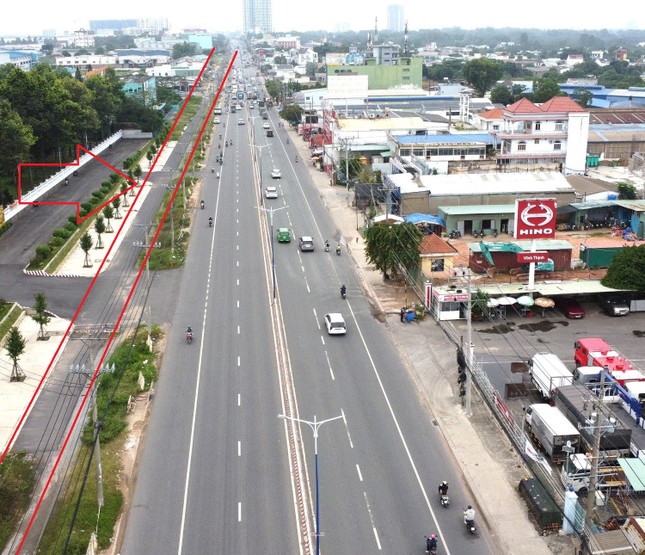
Expansion of National Highway 13 — Unlocking the “Golden Corridor” of the Northeastern Economic Zone
The Ho Chi Minh City section of approximately 6 km is being expanded into 8–10 lanes, and in the long term, elevated expressway construction is planned to further strengthen its role as a major arterial route.
In the Binh Duong section, the widening to 8 lanes, continuous intersection upgrades, and drainage improvements are already progressing rapidly.
As a result, travel time between Northeast Ho Chi Minh City (Thu Duc City) and Binh Duong (Thuan An, Di An, Thu Dau Mot) is being significantly reduced, accelerating the expansion of residential, commercial, and service sectors.
Metro Line 3B & Binh Duong Urban Railway:
NH13 Becomes a “Triple Infrastructure Axis”
Metro Line 3B — planned almost parallel to National Highway 13 — is a major route that will connect the city center (Districts 1 & 3) with Binh Thanh and Thu Duc (Hiep Binh Phuoc).
Binh Duong is also developing its own urban railway network (12 planned lines), creating a triple transit infrastructure zone where NH13, Metro Line 3B, and Binh Duong Metro will be connected.
This structure resembles the Seoul-style TOD (Transit-Oriented Development) model, which is highly favored by Korean investors and is likely to stimulate future mixed-use developments including commercial, office, and residential complexes.
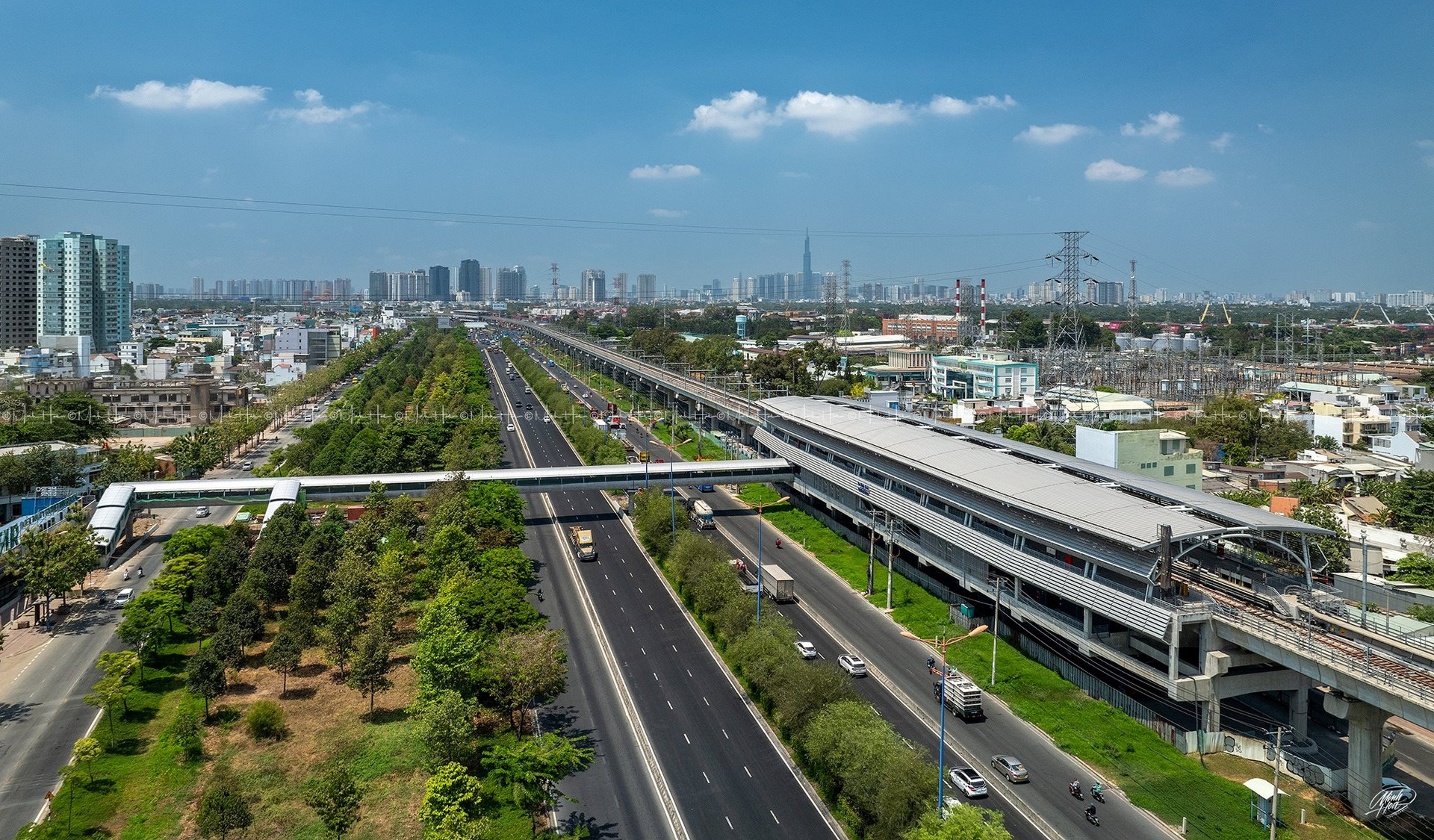
Population, Demand & Industrial Transition:
Strong Market Driven by Both End-User & Expat Demand
The northeastern Ho Chi Minh City and Binh Duong region are major hubs for Korean and multinational corporations such as Samsung, Lotte, and LG, housing hundreds of thousands of professionals and engineers.
As a result, demand for high-end apartments and long-term rentals continues to rise, significantly contributing to price stability and lower investment risk.
The area around National Highway 13 — once an industrial zone — is rapidly transforming into a residential, commercial, and office hub.
The shift from factory/warehouse zones → new towns & mixed-use commercial districts is a key driving force of real estate value appreciation.
Why National Highway 13 is Gaining Investor Attention
Serving as a crucial route connecting Ho Chi Minh City with Binh Duong, Binh Phuoc, and the Central Highlands, National Highway 13 directly influences real estate prices whenever related infrastructure projects progress — triggering early-stage investment (front-running) among investors.
Experts expect property values to rise sharply once the HCMC section is expanded to 60 meters width and the Binh Duong section completes its upgrade from 6 to 8 lanes and becomes fully operational next year.
With new supply declining due to stricter legal frameworks, analysts project that a 10–30% price increase in this corridor is very achievable.
Industry specialists consider the expansion and upgrade of National Highway 13 not only a core solution to congestion and regional connectivity, but also a strong catalyst for surrounding real estate market growth.
Real estate prices typically rise in proportion to infrastructure development — even more rapidly along core economic axes and arterial highways.
Recent newly launched condo projects in Thuan An (Binh Duong) have already shown strong buyer response tied to the NH13 expansion news.
Many buyers are purchasing now at “reasonable” prices, expecting major appreciation from 2025 onward, with contract activity rising before the Lunar New Year.
Four Key Drivers Behind Investor Confidence
National Highway 13 benefits from ** quadruple growth engines **:
1️⃣ Triple infrastructure: NH13 + Elevated Highway + Metro Line 3B
→ transforming from a road corridor into a regional economic corridor
2️⃣ Metro Premium:
Metro Line 1 already demonstrated massive value uplift
→ Strong potential for “repeat performance” along Metro Line 3B
3️⃣ Growing expat community:
Samsung, LG, Lotte clusters → rising Korean & Japanese demand
→ stronger rental income stability
4️⃣ Urban redevelopment momentum:
Industrial zones rapidly transitioning into mixed-use districts
Metro Line 1 Proof of “Transit Premium”
- Savills report: 35–70% price increase for metro-adjacent condos
- Market data: up to 150% increase in some locations over 8 years
- Properties within 500m priced ~15% higher than surrounding units
- Rental prices: expected +10–15%
➡️ Metro accessibility = higher price appreciation probability
➡️ A model likely to repeat along National Highway 13 + Metro Line 3B
Conclusion
This corridor is one of the very few areas that combines:
✔ Infrastructure growth
✔ Strong local + foreign demand
✔ Urban transformation
✔ Established expat rental market
→ Making it a high-certainty, mid-to-long-term appreciation zone, not a speculative short-term trend.
Tin xem nhiều
 02/01/2026
Sun Group proposes a land swap of 360 hectares in exchange for constructing the Rach Chiec Sports Complex.
Chính chủ cần chuyển nhượng gấp căn 2 ngủ diện tích thông thủy 78m2 full đồ, khách mua chỉ cần dọn quần áo đến có thể ở ngay
INDOCHINE ACHIEVES MAJOR SUCCESS AT THE HAPPY ONE MORI PROJECT AS THE NORTHERN MASTER DISTRIBUTOR
Can Foreigners Own Property in Vietnam? A Complete Guide to Real Estate Ownership
Detailed overview of 12 metro lines with a total over 600 km, connecting the major urban areas of Ho Chi Minh City.
INDOCHINE Proudly Appointed as Master Distributor for The Win City – High-Rise Mixed-Use Development in Western Saigon
Indochine is proud to be the master distributor of the Happy One Mori project.
Indochine partners with the developer to introduce La Pura to the international market.
The Global City – Urban Township in District 2
Vietnam Rental Yield: Ho Chi Minh City
INDOCHINE Ready to “Ride the Waves” at THE MERIDIAN Da Nang Launch Event — “The Maiden Voyage”


