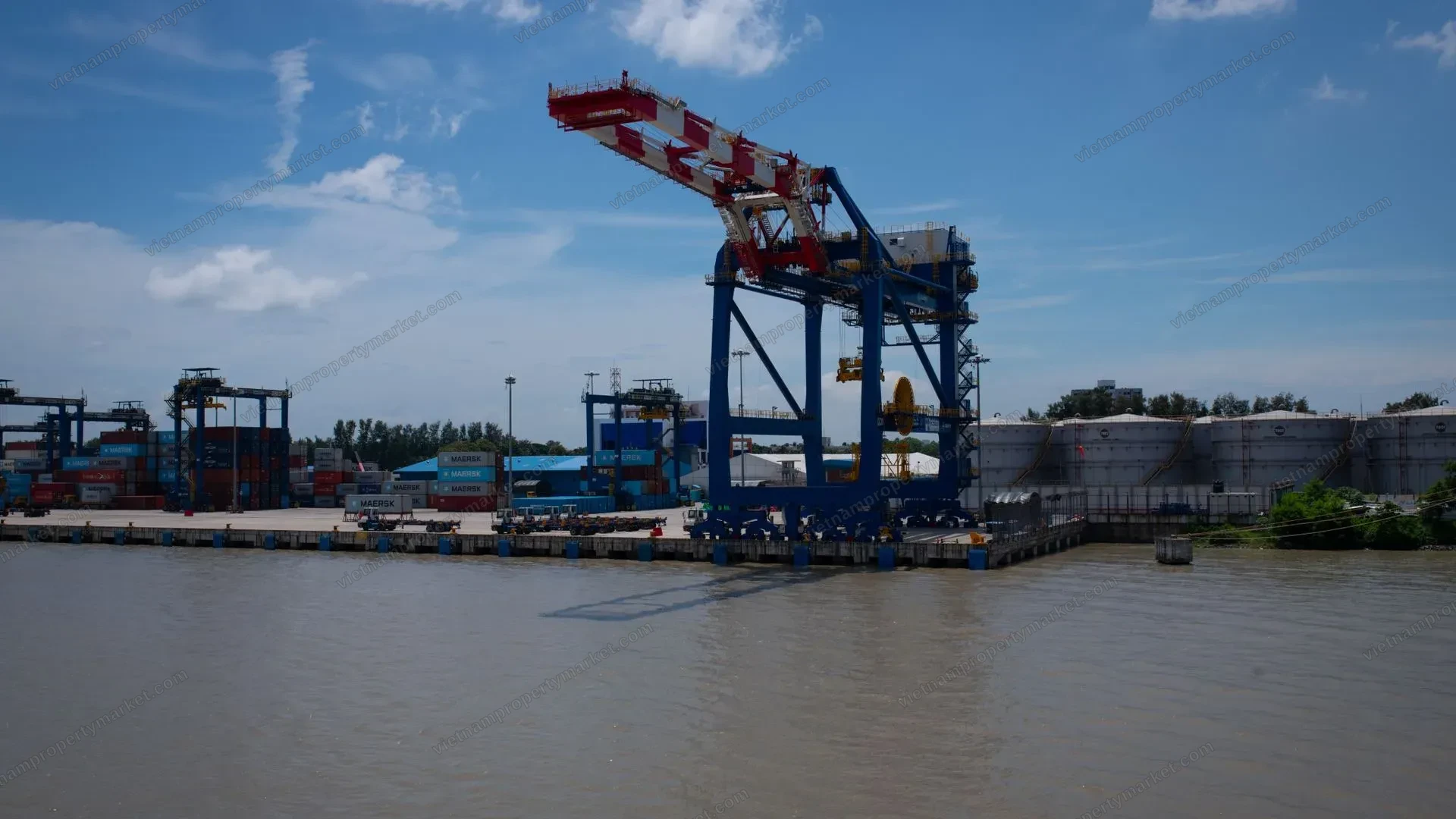
Selecting a Chinese industrial park Vietnam depends on your supply chain routing and manufacturing processes: for electronics assembly and land-sea intermodal transport to China, opt for the Shenzhen Hai Phong Cooperation Zone in Northern Vietnam; for energy-intensive textile dyeing and printing, choose Texhong Hai Ha Industrial Zone in Quang Ninh; and for operations targeting the Southern Vietnamese consumer market or agricultural processing, look to Long Giang Industrial Park in Dong Thap. Long Giang Industrial Park is China's only state-level overseas economic and trade cooperation zone in Vietnam, with a tenant base predominantly composed of Chinese-funded enterprises.
Key takeaways
- Chinese industrial parks and operating fees: Long Giang Industrial Park is a state-level overseas economic and trade cooperation zone; according to guidelines from dulongip.vn and ttcdanghuynh.vn, the standard industrial land lease term is up to 50 years, with a signing deposit of 10% to 15% and annual management and maintenance fees ranging from USD 0.4 to 1.0 per square meter.
- Q2 2026 industrial land prices: According to data from Cushman & Wakefield and CBRE, asking rents for full-term land leases in Northern Vietnam's core zones range from USD 137.7 to 143 per square meter, compared to USD 183 to 186.4 in Southern Vietnam.
- Q2 2026 ready-built factory monthly rents: Data from Cushman & Wakefield and CBRE indicates asking rents of USD 5.0 to 5.3 per square meter in Northern Vietnam, and USD 4.9 to 5.2 per square meter in Southern Vietnam.
- Prerequisites for tax incentives: Corporate income tax incentives advertised by industrial parks are not automatically granted upon entry; projects must meet the encouraged industry or regional criteria under the Corporate Income Tax Law (No. 67/2025).
- Separation of executive property ownership and visas: Foreign executives buying property in Vietnam receive an ownership term of up to 50 years (renewable, and convertible to freehold upon resale to a Vietnamese buyer), but the property title does not grant a work visa or Temporary Residence Card (TRC).
On this page
Suppose you have just flown into Vietnam with a factory construction budget, preparing to sign a 50-year industrial land lease in Hai Phong or Southern Vietnam while scouting nearby apartments for your resident executives. The park's investment brochure promises "full Chinese-language services" and "corporate income tax incentives," yet your CFO reminds you to verify the latest 2026 tax legislation and uncover any hidden costs. Below, we break down the fundamentals of the four major Chinese-invested industrial parks alongside 2026 market pricing.
Which Industries Suit the Four Major Chinese Industrial Parks in Vietnam?
Chinese-invested industrial parks in Vietnam generally fall into four categories: state-level cooperation zones, municipal state-owned enterprise cooperation zones, vertical industry-specific zones, and early-stage export processing zones. The China Business Association in Vietnam operates branches in Ho Chi Minh City, Quang Ninh, and Hai Phong, facilitating access to local compliance resources. A comparison of the fundamental parameters of the four representative parks is outlined below:
| Park Name | Province / Municipality (Post-Administrative Restructuring) | Development Scale & Occupancy Status | Leading Industries & Locational Attributes |
|---|---|---|---|
| Long Giang Industrial Park (Long Giang IZ) | Dong Thap (formerly Tien Giang, now merged into Dong Thap) | China's only state-level overseas economic and trade cooperation zone in Vietnam; mature development with predominantly Chinese-invested tenants | Adjacent to the Ho Chi Minh City port cluster; suited for light industry, machinery, building materials, and manufacturing targeting the Southern Vietnam market |
| Shenzhen Hai Phong Cooperation Zone | Hai Phong | Phased development; tenant base is predominantly Chinese-invested enterprises | Operated by Shenzhen state-owned capital and adjacent to Hai Phong deep-water ports; concentrated in electronics manufacturing, electromechanics, and supply chain supporting enterprises |
| Texhong Hai Ha Industrial Zone (Texhong Hai Ha IZ) | Quang Ninh | Planned across 3,300 hectares, according to a November 2014 historical report by taweekly.com | Located near the Mong Cai border gate with China; equipped with full-chain environmental impact assessments (EIA) and wastewater treatment facilities for textile dyeing, printing, and spinning |
| Linh Trung Export Processing Zone (Linh Trung EPZ) | Ho Chi Minh City (including areas merged from former Binh Duong province) | Early Sino-Vietnamese joint-venture benchmark park; fully mature development | Traditional export processing trade; currently facing surrounding urban land saturation, operating primarily on the turnover of existing factory stock |
Planning a plant? Tell us what you make, the floor area and the start month →
How Do Chinese Industrial Parks Differ from Mainstream Vietnamese Industrial Parks?
The primary differences between Chinese-invested parks and mainstream international Vietnamese industrial parks such as VSIP or DEEP C lie in working language, supply chain clustering, and remaining land availability. For manufacturers expanding overseas for the first time without Vietnamese- or English-speaking engineering teams, Chinese park management boards provide end-to-end Chinese-language coordination—from the Investment Registration Certificate (IRC) and Enterprise Registration Certificate (ERC) to the Environmental Impact Assessment (EIA). The high concentration of Chinese upstream and downstream suppliers within these zones also simplifies local component sourcing.
The drawbacks involve limited land availability and misconceptions around tax rates. For example, Long Giang Industrial Park has a high occupancy rate, leaving fewer large, contiguous plots available. Furthermore, the "corporate income tax incentives" highlighted in some promotional brochures are not granted automatically upon moving into the park. In actual 2026 regulatory approvals, your investment project must qualify under specific high-tech, supporting industry catalogs, or designated socio-economically disadvantaged regional criteria stipulated by Vietnam's Corporate Income Tax Law (No. 67/2025)—and this must be explicitly stated on your Investment Registration Certificate (IRC) before tax authorities will recognize it.
How Much Does It Cost to Lease Industrial Land and Ready-Built Factories in Vietnam in 2026?
Because Chinese-invested parks do not publicly list their transacted unit prices, investors must use regional market asking rates as a baseline for negotiations. In 2026, Vietnam's industrial real estate market entered a phase of moderate adjustment and divergence. According to H1 and Q2 2026 reports published by Cushman & Wakefield, CBRE, and JLL, asking rates for land and factories across core northern and southern industrial zones and key provinces are as follows:
| Region / Province (Post-Administrative Merger) | Industrial Land Asking Rent (USD/sqm/remaining lease term) | Ready-Built Factory Asking Rent (USD/sqm/month) | Ready-Built Warehouse Asking Rent (USD/sqm/month) | Occupancy Rate & Data Period |
|---|---|---|---|---|
| Northern Core Zone Average (including Hai Phong, Bac Ninh, Hung Yen, etc.) | 137.7 – 143 (typical: 142) | 5.0 – 5.3 (typical: 5.1) | 4.5 – 4.9 (typical: 4.9) | Q2 2026 (C&W, CBRE, JLL) |
| Hai Phong Major Parks (Trang Due, VSIP, DEEP C) | 120 – 160 (Savills June 2026 guide asking price) | Not separately disclosed | Not separately disclosed | June 2026 (Savills) |
| Bac Ninh (including former Bac Giang province) | 150 – 155 (Q2 2025 pre-merger Bac Ninh historical asking price) | Not separately disclosed | Not separately disclosed | Land occupancy rate above 70% (Q2 2026, C&W) |
| Southern Core Zone Average (Ho Chi Minh City, Dong Nai, Tay Ninh) | 183 – 186.4 (typical: 186) | 4.9 – 5.2 (typical: 5.0) | 4.6 – 5.07 | Q2 2026 (C&W, CBRE, JLL) |
| Ho Chi Minh City (including former Binh Duong province) | 187.5 (184.2 in Q1 2026) | 5.1 | 4.5 | Q2 2026 (C&W) |
| Dong Nai (including former Binh Phuoc province) | 189.6 | 4.9 | 4.7 | 74.78% combined occupancy across 43 parks at year-end 2025 (DNIEZA) |
| Tay Ninh (including former Long An province) | 179.6 (down 4.8% QoQ) | 4.6 | 4.8 | Land occupancy 60.9%, factory occupancy 93.7% (Q2 2026, C&W) |
Beyond lump-sum or installment-based land rent, enterprises must budget for routine operating fees and security deposits. According to 2026 industry guidelines from dulongip.vn and ttcdanghuynh.vn, the standard term for industrial land is up to 50 years (investors receive the remaining term on the park's master title), with signing deposits typically set at 10% to 15% of the total contract value. Annual infrastructure management and maintenance fees range from USD 0.4 to 1.0 per square meter per year, while wastewater treatment volume is generally billed at 80% of clean water intake.
Regarding site selection risks, the most common financial loss occurs when an enterprise pays a 10% to 15% land deposit only to discover that the park's master land title has fewer than 30 years remaining, or that the company's environmental discharge metrics exceed the park's quota—preventing the issuance of an Investment Registration Certificate (IRC) and making the deposit difficult to recover. Before signing or remitting payment, always inspect the park's original master Land Use Rights Certificate and EIA approval documents.
What Legal and Visa Restrictions Apply to Expatriate Executives Buying Homes Near Industrial Parks?
When inspecting Vietnamese industrial parks in Hai Phong, Bac Ninh, or Ho Chi Minh City, many foreign business owners simultaneously look to purchase residential properties for their expatriate executives and families. From a visa compliance standpoint, it is vital to distinguish property ownership from residency rights: buying real estate in Vietnam does not grant a foreign national any long-term residence visa or Temporary Residence Card (TRC).
Under Articles 33 and 36 of Vietnam's Law on Entry, Exit, Transit, and Residence of Foreigners (No. 47/2014), when a foreigner holding a business or work visa legally rents or resides in their own property in Vietnam, the landlord or property owner must register their temporary stay with the local police. Meanwhile, a multi-year Temporary Residence Card (TRC) must be sponsored by the Vietnamese corporate entity or investment vehicle that processes your work permit. Do not trust brokerage claims promising "residency rights with property purchase."
Regarding purchase channels and title compliance, foreign individuals must adhere to the following statutory requirements:
- Counterparties and Contracts: Foreigners may only purchase primary market properties directly from a developer (including unsold developer inventory in completed projects) by signing a formal Sale and Purchase Agreement (SPA), or purchase a secondary market property from another foreign owner via a transfer agreement to assume the remaining ownership term. Under Article 17.2 of the 2023 Housing Law, foreign nationals cannot purchase properties owned by individual Vietnamese citizens (the sole exception being Article 20.2.c, under which a foreign spouse married to a Vietnamese citizen residing in Vietnam enjoys equal treatment).
- Quotas and Ownership Terms: Governed by Decree 95/2024/ND-CP, within the 30% foreign ownership quota per condominium building (Article 19), foreigners are granted an ownership term of up to 50 years from the issuance date of the Pink Book (ownership certificate), which is renewable; upon resale to a Vietnamese buyer, the title converts back to long-term (freehold) ownership (Article 20).
If you mistakenly sign a contract for a unit owned by a local Vietnamese individual, you will be unable to transfer the title or obtain a Pink Book, putting your deposit at risk. Before paying any deposit, have our foreign buyer sales team verify the seller's legal status, the building's remaining foreign quota, and the Pink Book status.
Frequently Asked Questions (FAQ) on Chinese Industrial Parks and Local Setup in Vietnam
Do industrial park land rent quotes include taxes and fees? How is the remaining lease term calculated?
According to notes in the 2026 reports by JLL and Cushman & Wakefield, asking rents for industrial land on the market are typically net prices excluding Value Added Tax (VAT) and annual management fees. The land lease term does not run for a full 50 years from the date the enterprise signs the contract; rather, it depends on the start date when the park developer obtained the government land allocation approval. For example, official HEPZA records show that the land lease for My Phuoc 3 Industrial Park in former Binh Duong province (now merged into Ho Chi Minh City) expires on August 31, 2056.
Are payment schedules for industrial park land rent negotiable?
Yes, they are negotiable. According to the 2026 process guide from dulongip.vn, a deposit of 10% to 15% is typically paid upon signing the Memorandum of Understanding (MOU), while subsequent installments can be negotiated with the management board to align with milestones such as obtaining the Investment Registration Certificate (IRC) and completing land handover.
For executives settling and buying property, how should we choose between Hanoi and Ho Chi Minh City?
The choice depends on your factory's location. If your plant is located in the Shenzhen Hai Phong Cooperation Zone or Bac Ninh, executives typically settle in Ha Noi or urban Hai Phong, which offer frequent direct flights to major Asian hubs and four distinct seasons. If your factory is in Long Giang Industrial Park, Dong Nai, or Tay Ninh, executives generally base themselves in Ho Chi Minh City, where international business districts, international schools, and foreign-quota condominium supply are well established. We can provide a compliant foreign-quota price list for the respective city based on your park's location.
Three Questions You Must Confirm in Writing Before Signing and Paying
- Park Developer and Corporate Use: Request written confirmation from the park management board stating the expiration date of the plot's master land title, the remaining environmental discharge quota, and whether your industry code qualifies for tax exemptions or reductions under the Corporate Income Tax Law (No. 67/2025).
- Industrial Land Cost Breakdown: Request a written schedule from the park detailing whether the per-square-meter land rent includes VAT, the unit rate for annual management fees, and the billing rate for wastewater treatment calculated at 80% of clean water intake.
- Executive Personal Apartment Purchase: Before paying a deposit, require the developer or transferor to confirm in writing the seller's legal status (direct developer sale or foreign owner resale) and the building's current remaining availability within the 30% foreign ownership quota.
If you are planning residential options near industrial parks for your expatriate executive team, feel free to contact our international desk via Zalo or WhatsApp for the latest foreign-quota apartment price lists, remaining quota verification sheets, and business-visa rental compliance checklists across major industrial hubs including Hanoi, Hai Phong, and Ho Chi Minh City.
Legal Basis
- Housing Law 2023 (Law No. 27/2023/QH15)
- Land Law 2024 (Law No. 31/2024/QH15)
- Decree No. 95/2024/ND-CP
- Indochine Real Estate JSC — vietnampropertymarket.com
Want a deeper market briefing?
Our research desk publishes a 40-page quarterly Vietnam Real Estate Brief. Free for qualified investors.
Request the briefMore articles
All news Industrial
hai phong industrial park 2026: New Hai Phong after Hai Duong's merger, the port manufacturing corridor and major Taiwanese and Korean manufacturers
In 2026, the key change in Hai Phong, Vietnam is not the addition of a new industrial park name, but that following the merger of Hai Duong (Hai Duong Province) into Hai Phong (Hai Phong City), port, manufacturing hinterland and supply chain location selection can be considered within…
Read article Industrial
quang ninh industrial park 2026: Quang Ninh becomes a centrally governed city, forming a northern port corridor attracting Chinese- and Taiwanese-funded enterprises
Like Hai Phong, Quang Ninh is a centrally governed city on the northern port corridor. For Chinese- and Taiwanese-funded companies setting up factories in northern Vietnam, the upgrade means higher-level approval procedures and unified provincial planning standards, while industrial park land prices and infrastructure…
Read article Industrial
tay ninh industrial park 2026: The New Tay Ninh After Long An Merger, a Lower-Rent Option Near Ho Chi Minh City
After Long An merged into Tay Ninh, the new Tay Ninh Province oversees two industrial belts: the former Long An parks directly adjacent to Ho Chi Minh City, and the former Tay Ninh parks farther inland. So the real question is not whether Tay Ninh is a good choice, but which of these two areas…
Read articleThe essentials every foreign buyer should read before reserving.