

You've seen the headlines about Vietnam's growth. You've heard friends talk about buying a condo in Ho Chi Minh City or a landed house near Binh Duong. But before you wire money across borders, there's one number you need to understand: 50. That's the number of years you'll hold title as a foreign buyer under Vietnam's Housing Law 2023. The 50-year term is renewable, it's legal, and it's not as scary as it sounds — resell to a Vietnamese buyer and the unit becomes long-term (permanent) ownership — but it changes how you should think about your exit strategy.
On this page
This is a market-insight post for foreign investors buying property in Vietnam. Not a generic buying guide. Not a list of "hot districts" copied from a brochure. This is about how the rules actually work, what's changed recently, and where the smart money is looking in 2025.
What the 2025 Vietnam Property Market Looks Like From a Foreign Buyer's Seat
Vietnam's property market has cooled from the feverish pace of 2021–2022. That's not a bad thing for you. Prices in some segments have stabilised, developers are offering better payment terms, and the legal framework has actually improved for foreign buyers. The Housing Law 2023 (Law No. 27/2023/QH15) took effect in August 2024, and it clarified several points that used to make overseas investors nervous.
Here's what changed in practice:
- The 50-year ownership term is now explicitly renewable. Article 20 of the Housing Law 2023 states that foreign owners can renew their ownership term when it expires. The old law was vague; the new one is not.
- The foreign-ownership quota is still 30% per building. Article 19 of the same law caps foreign ownership at 30% of the units in a condominium building. For landed properties, the cap is 250 houses per ward. That quota hasn't expanded, so prime projects still sell out of foreign allocation fast.
- Decree 95/2024/ND-CP provides the implementing details. It clarifies procedures for buying, selling, and leasing as a foreigner.
What hasn't changed: you still buy through an official Sales and Purchase Agreement (SPA) with the developer. You still receive a Pink Book — the certificate of ownership — that shows a 50-year term. And when you resell to a Vietnamese national, the title converts to permanent freehold ownership. That last point matters more than most buyers realise.
Why the Resale Rule Is Your Hidden Exit Strategy
Most foreign investors worry about the 50-year clock. Here's the thing: the clock only matters if you sell to another foreigner, who owns it for the remaining term, can still renew it if it has not been renewed yet, and can still resell to a Vietnamese buyer, after which it becomes long-term (permanent) ownership. If you sell to a Vietnamese buyer — which is the majority of transactions in most projects — the property becomes freehold for them. That makes your unit more attractive to local buyers, not less. In practice, the 50-year term rarely depresses resale value because the local market absorbs most inventory.
You can also lease your property freely as a foreign owner. Short-term rentals, long-term leases, corporate leases — all allowed. The income is taxable, but the rules are straightforward, and you can repatriate the proceeds after paying taxes. More on that below.
Where Foreign Investors Are Actually Buying in Vietnam Right Now
Ho Chi Minh City remains the anchor. District 1, District 2 (Thu Duc City), and District 7 have the deepest liquidity and the most international buyer activity. But prices in the city centre have climbed, and the 30% foreign quota in many completed projects is already full. That pushes new buyers to look at launch phases of upcoming projects or to secondary sales where a foreign owner is selling their allocation.
Binh Duong is the quiet winner. It sits right next to Ho Chi Minh City, has industrial parks that keep attracting manufacturers, and its property prices are a fraction of HCMC's. For investors who want rental yield rather than capital appreciation, Binh Duong's worker housing and mid-range apartments have a different risk-return profile. You're not buying a trophy asset; you're buying cash flow.
Da Nang is the third pillar. It's the most liveable city in Vietnam for expats, and the beachfront condos there have strong short-term rental demand. The foreign quota in beachfront projects fills quickly, so you need to move when a new phase launches.
Ha Noi is a different game. The capital's market is more domestic, more bureaucratic, and less familiar to overseas buyers. Unless you have a specific reason to buy there — family, business, or a particular project you know well — most foreign investors start in the south.
What the 30% Quota Means for Your Buying Timeline
Article 19 of the Housing Law 2023 caps foreign ownership at 30% per condominium building. That's not a suggestion; it's a hard legal limit. Once a building hits 30% foreign-owned units, no more foreign buyers can purchase in that building — even if the developer wants to sell to you.
This creates a real timing problem. In popular projects, the foreign allocation can sell out within months of launch. If you wait until the building is completed and you've done all your due diligence, the quota may already be full. The practical move is to register interest with a developer or licensed broker early, ideally at the pre-launch stage, and be ready to sign the SPA quickly when units are released.
For landed property, the cap is 250 houses per ward. That sounds like a lot, but in central wards of HCMC or Da Nang, it's not. Once the ward hits 250 foreign-owned houses, you're locked out of that ward entirely. Again: early action wins.
The 50-Year Ownership Term: What It Really Means for Your Money
Let's be direct. You are not buying freehold land in Vietnam as a foreigner. You are buying a 50-year ownership interest in a specific property. That's the law. Article 20 of the Housing Law 2023 sets the term, and it also provides for renewal. The renewal process isn't automatic — you'll need to apply — but the legal right to renew is now explicit.
What does renewal cost? The law doesn't specify a fixed fee. In practice, it's an administrative process with associated fees, not a second purchase price. You're not paying 100% of the property value again. But you should budget for legal and administrative costs when the time comes.
Here's what most overseas buyers miss: the 50-year term starts when you receive the Pink Book, not when you sign the SPA. In off-plan purchases, there can be a gap of two to three years between signing and receiving title. That means your effective ownership period is closer to 47–48 years from the day you pay. Not a dealbreaker, but it matters for long-term planning.
Can You Pass the Property to Your Children?
Yes, but with a caveat. If your children are Vietnamese citizens, the property converts to freehold for them. If they're foreign nationals, they inherit your remaining ownership term. The 50-year clock doesn't reset on inheritance. That's a critical detail for family succession planning, and it's worth discussing with a Vietnamese lawyer before you buy.
Money Out: Repatriating Funds and Taxes for Non-Residents
You can get your money out of Vietnam. The process is legal and routine, but it's not instant. Here's the path:
- You must have a valid Pink Book and proof that you've paid all taxes on the sale.
- The buyer pays you in Vietnamese dong through a local bank account.
- You then apply to convert and transfer the funds abroad through a licensed bank.
- The bank will ask for the sale contract, tax payment receipts, and your passport. Allow several weeks for the process.
On the tax side, foreign sellers pay the same transfer taxes as Vietnamese sellers. That includes a 2% registration fee and a personal income tax of 2% of the sale price (or the gain, depending on how you structure it). Rental income is taxed at 5% VAT plus 5% personal income tax on gross rent — a combined 10% on rental revenue. There's no separate capital gains tax regime for foreigners; the 2% on transfer is effectively your exit tax.
One practical tip: keep every receipt from the original purchase. When you sell, the tax office may ask for the original SPA to verify the purchase price. If you bought off-plan and paid in instalments, keep those bank transfer records too. Missing paperwork is the most common reason fund repatriation gets delayed.
FAQ: Foreign Investors Buying Property in Vietnam
Can I buy a house with land as a foreigner?
Yes, but only within the 250-per-ward cap, and only as 50-year ownership. You cannot buy land outright as a foreign individual. You can buy the house, and the 50-year ownership term covers both the house and the land use right.
What happens if the building hits the 30% foreign quota?
No more foreign buyers can purchase in that building. You can still buy through a Vietnamese spouse or a licensed local company, but that adds complexity and risk. Most buyers simply move to a different project or wait for a new phase.
Is 50-year ownership renewable?
Yes. Article 20 of the Housing Law 2023 explicitly provides for renewal. The process involves applying to the relevant authorities before the term expires. The law doesn't set a fixed renewal fee, but it's an administrative cost, not a repurchase.
Can I rent out my property as a foreign owner?
Yes. You can lease it short-term or long-term. Rental income is taxable at a combined 10% (5% VAT + 5% personal income tax) on gross rent. You must declare this through the local tax office.
What happens if I sell to a Vietnamese citizen?
The title converts to permanent freehold ownership for them. This is one of the strongest selling points when you exit — local buyers know they're getting a freehold property, which often makes them willing to pay a premium.
The Bottom Line for Foreign Investors in 2025
Vietnam's property market is not for passive tourists. It's for investors who understand the legal structure, move early on quota-limited projects, and plan their exit before they sign. The renewable 50-year ownership term is manageable. The 30% quota is the real constraint. The resale market is liquid, especially in HCMC and Da Nang, and the ability to sell to Vietnamese nationals, for whom it becomes long-term (permanent) ownership, gives you a natural buyer pool.
If you're serious about buying, start with three steps. First, confirm your budget includes all taxes and legal fees — add 3–5% on top of the purchase price. Second, identify a project that still has foreign allocation available; don't assume the developer will tell you when it's full. Third, work with a licensed broker or law firm that has handled foreign transactions before. Vietnam's rules are clear, but they're not intuitive, and the paperwork matters.
The market has matured. The legal framework is better than it was five years ago. And for foreign investors who do their homework, Vietnam still offers one of the more compelling property stories in Southeast Asia. Just remember: the clock starts when the Pink Book lands in your hand. Make every year count.
Want a deeper market briefing?
Our research desk publishes a 40-page quarterly Vietnam Real Estate Brief. Free for qualified investors.
Request the briefMore articles
All news Property Sale/Resale
Vietnam Pink Book vs Sales Contract: What Foreign Buyers Need to Verify Before Completion
Updated: July 2026 Yes, foreign investors can legally purchase and own residential property in Vietnam through a 50-year ownership model, which is renewable under the Housing Law 2023 and Decree 95/2024/ND-CP and becomes long-term (permanent) ownership once the unit is resold to a Vietnamese buyer.
Read article Property Sale/Resale
Palm River: Reading the Price per Square Metre Before You Commit
A unit at Palm River is listed at a headline figure per square metre. That number looks competitive against other riverside projects in District 2.
Read article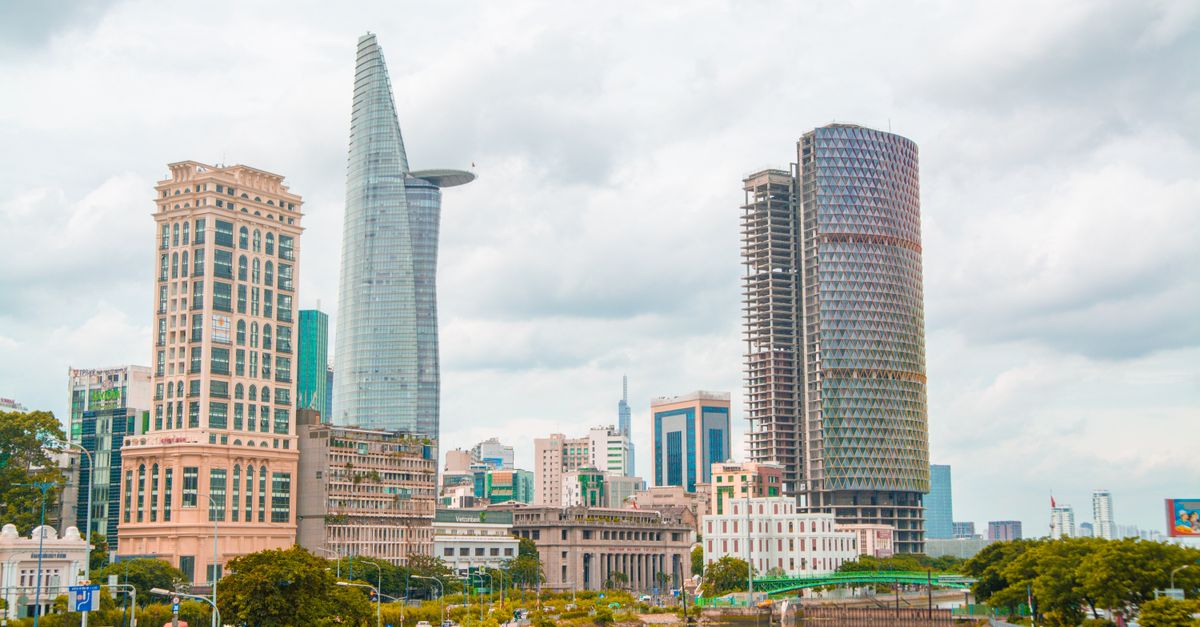 Property Sale/Resale
HCMC vs Hanoi vs Da Nang: Where a Foreign Buyer Should Put Money in 2026
Updated: September 2026 Yes, foreigners can own property in Vietnam — for up to 50 years, renewable, capped at 30% of units per condominium building and 250 landed houses per ward under Articles 19 and 20 of the Housing Law 2023; a unit resold to a Vietnamese buyer becomes long-term (permanent) ownership.
Read articleThe essentials every foreign buyer should read before reserving.