

For epe vietnam operations, an export processing enterprise (EPE) suits foreign-invested companies focused on export production and able to meet customs supervision requirements. For companies whose main customers are in Vietnam, a standard foreign-invested factory is generally more straightforward. An EPE can sell goods domestically, but those transactions must be handled as imports and exports; a 0% VAT rate does not mean a blanket tax exemption. Article 26 of Decree No. 35/2022/ND-CP requires the site to have fencing and access points and to be subject to customs supervision.
Key takeaways
- Article 26 requires physical separation and customs supervision; the factory’s intended use alone is not enough.
- Domestic sales by an EPE are treated as imports and exports, so customs duties and declaration responsibilities must be clarified.
- The 0% VAT rate must meet the requirements for export production; it does not apply to every purchase.
- EPE status alone does not automatically qualify a company for corporate income tax incentives.
On this page
Suppose you are comparing two factories for lease: one has lower rent, while the other already has separate fencing and access points. If most orders are for export, first confirm which site meets the supervision requirements, then compare rent. This helps avoid discovering after signing that extensive modifications are needed.
What are the requirements for setting up an export processing enterprise Vietnam?
An EPE in Vietnam is not simply a category based on foreign ownership. It is a regime involving site separation, investment documents, and customs management. A park’s willingness to lease a factory does not mean the premises already meet EPE requirements.
It has not been confirmed whether Decree No. 35/2022/ND-CP remains fully applicable following Law No. 143/2025 and Decree No. 96/2026. Request written clarification from the industrial park management board.
| Item to check | What to confirm before setup |
|---|---|
| Physical separation | Whether the site’s fencing, access points, and cargo flow arrangements can meet customs supervision requirements. |
| Status recorded in documents | Under Article 26, recording EPE status in the investment registration certificate (IRC) or a confirmation document from the competent authority is the starting point for recognition of non-tariff zone treatment; a lease alone is not sufficient. |
| Registration process | Confirm with the management board the application sequence and requirements for the IRC, enterprise registration certificate (ERC), and lease documents. |
| Conditions for starting production | Confirm the inspection process for customs supervision requirements, as well as fire safety, environmental, and building-use documents. |
| Factory specifications | Obtain written information on power capacity, wastewater treatment capacity, and the scope of permitted modifications; do not assess the site by floor area alone. |
Planning a plant? Tell us what you make, the floor area and the start month →
Can an EPE sell goods domestically in Vietnam? How is the 0% VAT rate assessed?
An EPE can sell goods domestically, but those sales are not ordinary domestic transactions. Under Article 26 of Decree No. 35/2022/ND-CP, transactions involving goods between an EPE and the domestic market in Vietnam are treated as imports and exports and involve customs duties.
Article 9 of the VAT Law No. 48/2024/QH15, effective from July 1, 2025, applies the 0% rate to certain transactions in non-tariff zones. The key conditions are that the goods are consumed within the zone and used for export production.
| Transaction scenario | Key assessment point | What to clarify before signing |
|---|---|---|
| Domestic supplier provides goods to an EPE | The 0% rate may apply only if the recipient is an organization in a non-tariff zone and the goods are consumed within the zone and used for export production. | Whether evidence of use, the contract, payment, and customs documents meet current requirements. |
| EPE sells products to a domestic customer | The transaction is treated as an import and export, not as an ordinary domestic delivery. | Who is responsible for the import declaration and who bears customs duties and import VAT. |
| Factory rent and other services | The rules above for goods cannot be applied automatically. | Confirm the tax treatment of each item and require quotations to state whether tax is included. |
A 0% rate is not the same as an exemption. VAT treatment also does not mean a company qualifies for corporate income tax incentives; eligibility must be assessed separately based on the industry, location, and investment project.
Vietnam EPE or a standard foreign-invested factory: which suits your orders?
Start with the customers’ locations and the flow of goods, then consider tax savings. A standard foreign-invested factory can also export; export orders alone do not make an EPE necessary.
| Comparison item | EPE | Standard foreign-invested factory |
|---|---|---|
| Primarily exports | Suitable for production projects that can bear the costs of site separation, customs supervision, and related management. | Can still export; tax treatment for export transactions must be assessed separately against the applicable conditions. |
| Primarily domestic sales | Increases the costs of import and export declarations and coordination with domestic customers. | Domestic transaction processes are generally more straightforward, subject to the registered business scope. |
| Procurement arrangements | Imports, domestic supplies, and the intended use of goods must be distinguished. | Handled under the general rules for imports and domestic procurement. |
| Factory selection | Confirm that the site can be separated and meet customs supervision requirements. | Fire safety, environmental, and permitted-use requirements still apply, but foreign ownership alone does not trigger EPE supervision requirements. |
| Tax assessment | Depends on the actual transaction conditions; a blanket tax exemption cannot be promised. | Assess imports and exports, domestic sales, and eligibility for investment incentives separately. |
How can you compare factory rents in Vietnam and avoid losing your deposit?
Land rent for the full lease term cannot be compared directly with monthly rent for a ready-built factory. Cushman & Wakefield’s Q2 2026 data provides the following regional benchmarks; these are not transaction prices for individual factories.
| Market | Industrial land rent | Asking rent for ready-built factories |
|---|---|---|
| Major northern industrial markets | USD 137.7 per square meter for the full remaining lease term. | USD 5.0 per square meter per month. |
| Major southern industrial markets | USD 186.4 per square meter for the full remaining lease term. | USD 4.9 per square meter per month. |
The data above does not fully specify how management fees and VAT are treated. When comparing individual quotations, list power upgrades, wastewater treatment, modifications for supervision, and the lease expiry date separately.
The most direct risk is that EPE requirements are not accepted while the deposit remains non-refundable. Prepare a draft lease with approval conditions and deposit refund terms; do not rely solely on verbal assurances from a broker.
- Check the landlord’s land lease documents, authority to lease, and the permitted use of the factory.
- Set out required modifications, responsibility for costs, and the scope of landlord approval in an appendix.
- Specify how the deposit will be refunded if the competent authority does not accept the intended use or supervision arrangements.
What are common misconceptions about epe vietnam before signing?
Must an EPE in Vietnam export all its products?
No. “Focused on export production” does not mean domestic sales are prohibited. Domestic sales must follow the relevant import and export procedures. If domestic orders are expected to become the main source of revenue, compare the option of a standard foreign-invested factory again.
Does leasing a factory in an industrial park automatically grant EPE status?
No. A factory’s compliance with industrial-use requirements does not mean it meets EPE supervision requirements. Investment documents, site layout, and competent-authority requirements must still be checked separately.
Should dormitories, work permits, and family accommodation be handled together?
These can be included in the factory setup budget, but they are not determined by EPE status. If an expatriate family rents a separate home, compare school transportation and commuting options. Confirm work permits and residence registration separately with the employer.
What are the sources for the legal basis and rental data?
- Article 26 of Decree No. 35/2022/ND-CP: EPE separation, recording of status, and domestic transaction rules; confirm its applicability and transition arrangements for 2026 with the management board.
- Article 9 of the VAT Law No. 48/2024/QH15: conditions for the 0% rate on certain transactions involving goods in non-tariff zones.
- Cushman & Wakefield MarketBeat reports for northern and southern industrial markets, Q2 2026: rental benchmarks for land and ready-built factories.
Before paying a deposit, obtain written answers to the following questions:
- Which currently effective regulations is the management board applying to this project, and can this factory meet customs supervision requirements?
- Who is responsible for declarations, taxes, and supporting documents for domestic sales and domestic procurement?
- If the setup or supervision requirements are not accepted, can the lease be terminated, and will the deposit be refunded?
Contact the Chinese and Taiwanese client services team via Zalo or WeChat for help checking the factory specifications, draft lease, and deposit refund terms. Obtain written confirmation from the competent authority and professional advisers for the applicable regulations and tax conclusions.
Want a deeper market briefing?
Our research desk publishes a 40-page quarterly Vietnam Real Estate Brief. Free for qualified investors.
Request the briefMore articles
All news Property Sale/Resale
Only 742 of 2,750 Applications Approved; HoREA Proposes Codifying Land Acquisition Mechanism in Law
The Vietnam Real Estate Association proposes incorporating the negotiated land acquisition mechanism under Resolution No. 171 into the revised Land Law; according to cafef.vn, only 742 of 2,750 applications were approved, or about three in ten, and the proposal has not yet taken effect.
Read article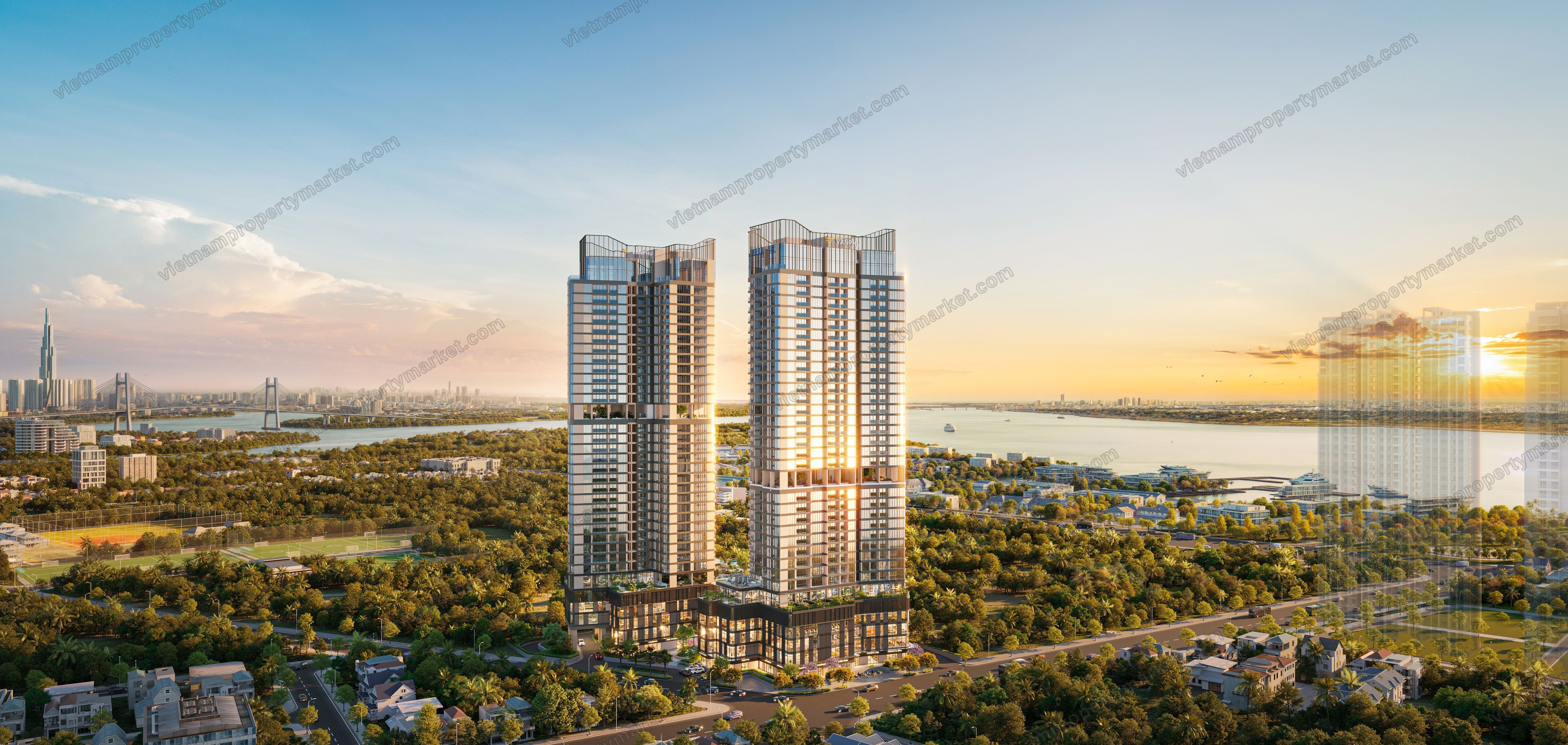 Property Sale/Resale
Vlasta Premier - Phu Thuan: How a Foreign Owner Actually Exits - Resale, Lease and Permanent Title for a Vietnamese Buyer
If you own a unit at Vlasta Premier - Phu Thuan, you can resell it to another foreign buyer or a Vietnamese national, and lease it out.
Read article Rentals
Vietnam Visa (2026): 45-Day Visa-Free & 90-Day e-Visa for Koreans, Monthly Rent Contract Periods Matched to Stay Duration
Korean passport holders can stay in Vietnam visa-free for 45 days from March 15, 2025 to March 14, 2028 (Resolution…
Read articleThe essentials every foreign buyer should read before reserving.